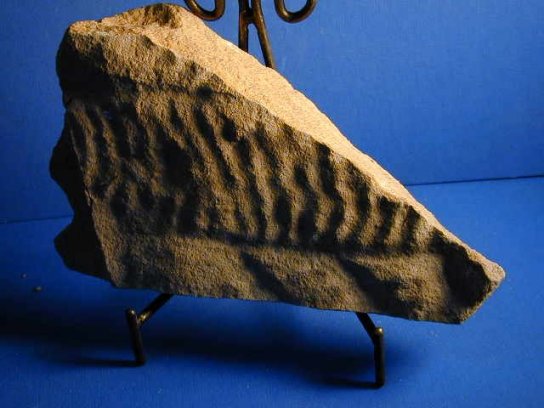
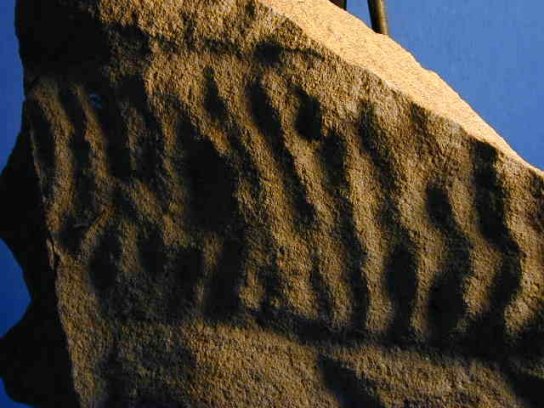
Climactichnites wilsoni
Trace Fossil (Ichnofossil)
Geological Time: Upper Cambrian (about 510 million years ago
Size: 9.8 by 5.2 by 1+ inches thick
Fossil Site: Blackberry Hill, Krukowski Quarry, Elk Mound Group, near Mosinee, Wisconsin
Code: DD305
Price: Sold
|
This unique Cambrian inchnofossil comes out of a sensational sandstone formation in Central Wisconsin that was once a tidal beach. This quarry has been producing some intriguing trace or ichnofossils, including huge madusae, tentacled jellyfish, Diplichnites, Protichnites, and the Climactichnites you see here, among others. The depositional environment in this quarry varies from very shallow marine to aerial. This is very significant as the ichnofossils from this locality may be the earliest evidence of large organisms and carnivores abandoning their marine habitat to utilize the terrestrial environment. If verified to be Middle Cambrian, these ichnofossil may pre-date the Cambrian-Ordovician trackways from Canada just described in the May 2002 issue of Geology. Climachtichnites has been described as looking like the track of a motorcycle that drove across rippled sand. The depositional environment in this quarry varies from very shallow marine to aerial. This is very significant as the ichnofossils from this locality may be the earliest evidence of large organisms and carnivores abandoning their marine habitat to utilize the terrestrial environment. If verified to be Middle Cambrian, these ichnofossil may pre-date the Cambrian-Ordovician trackways from Canada described in the May 2002 issue of Geology. Made of very dense sandstone, most specimens are large and very heavy. This specimen has been cut down to be of tractable size. Here is a chance to obtain famous paleotological anomaly that is relatively diminutive in size and price. (304) |