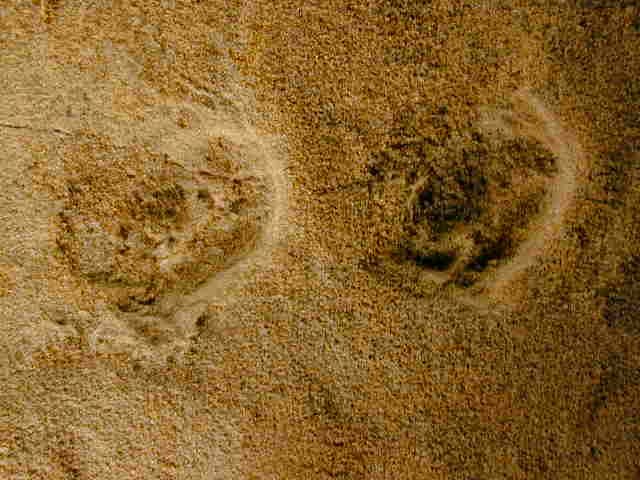
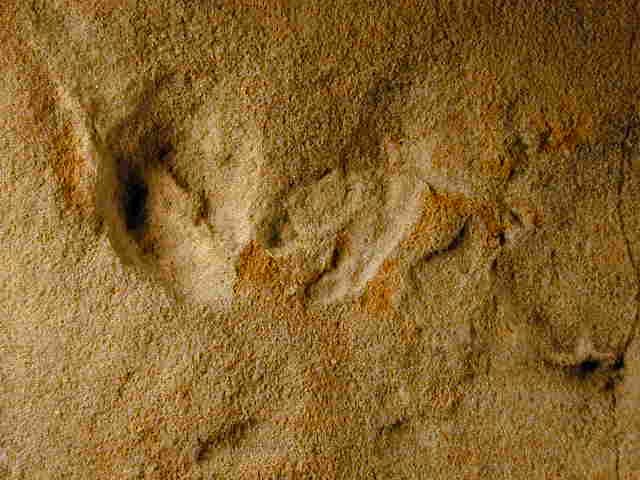
Name: Arthropoda: Euthycarcinoids
Age: Middle Cambrian
Size (25.4mm=1 inch): Matrix: 14 by 11 by 1.2 inches; animals impressions: about 1 to 1.6 inches
Location: Krukowski Quarry, Mount Simon Sandstone Outlier, Mosinee,Wisconsin
Code: DD404
Price: $675.00 - Sold
|
Despite a more
than a decade since ichnofossils and jelly fish fossils were discovered
in the Krukowski quarry, a single layer has yielded these body fossils
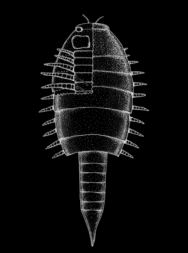
of the conjectured track maker of Protichnites, Diplichnites and
other ichnogenera. Interestingly, besides the Krukowski quarry,
only one other site in Argentina in the fossil record has both euthycarcinoid
fossils together with Protichnites-like trackways. Since the Krukowski
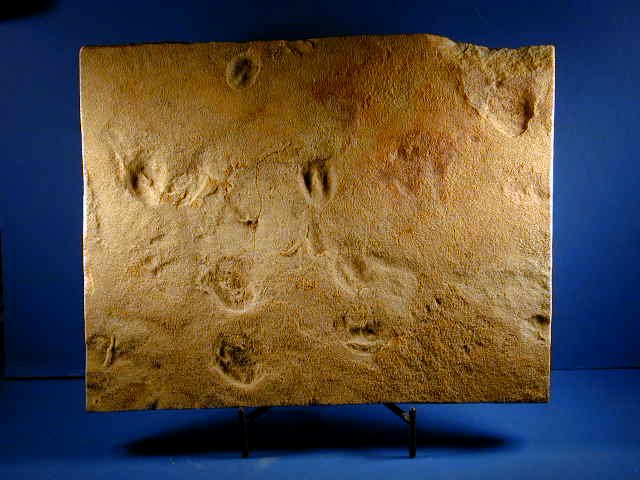
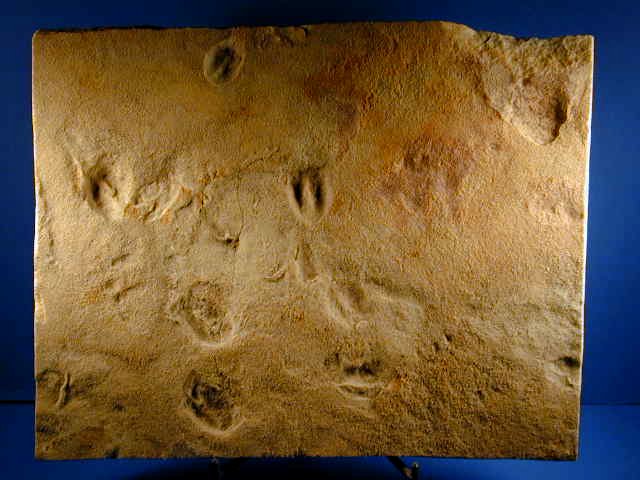
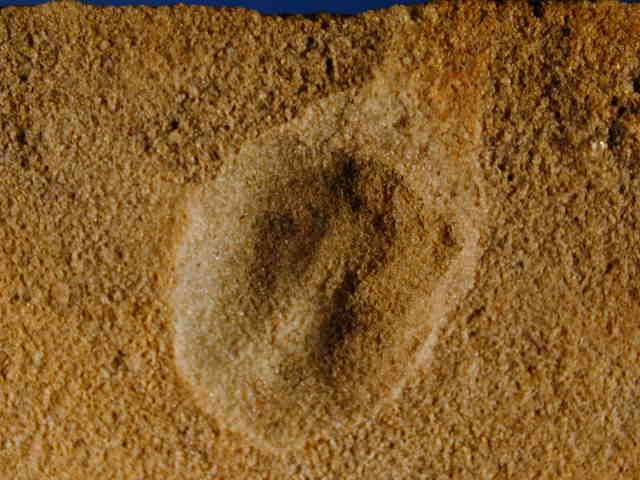
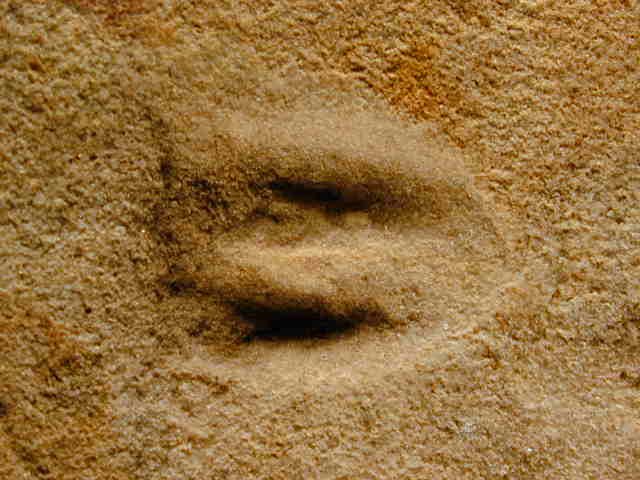
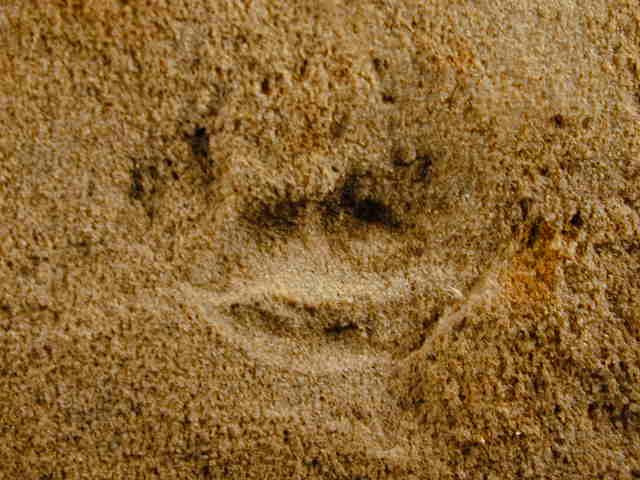
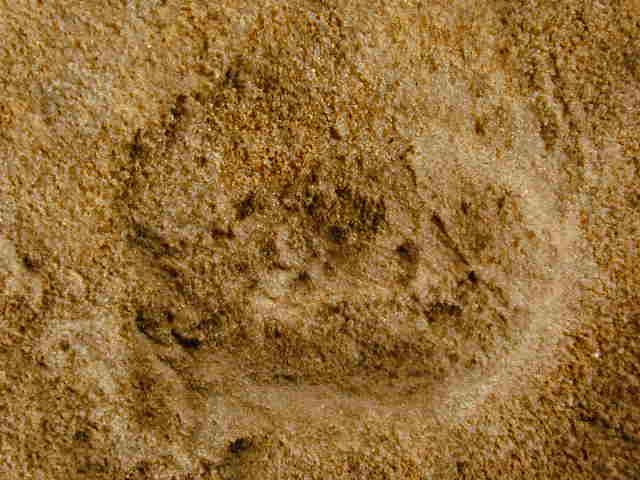
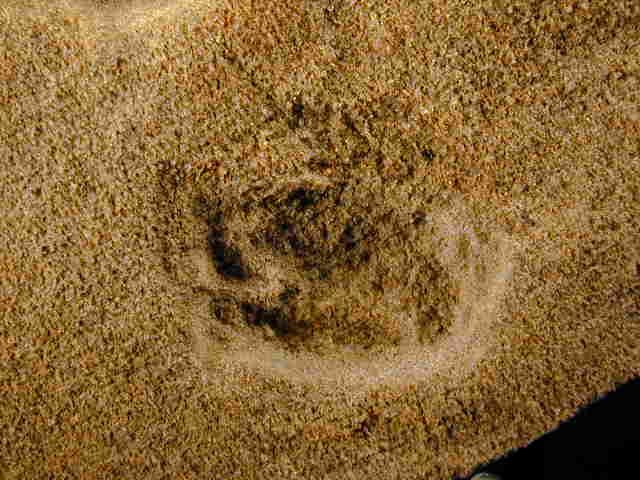
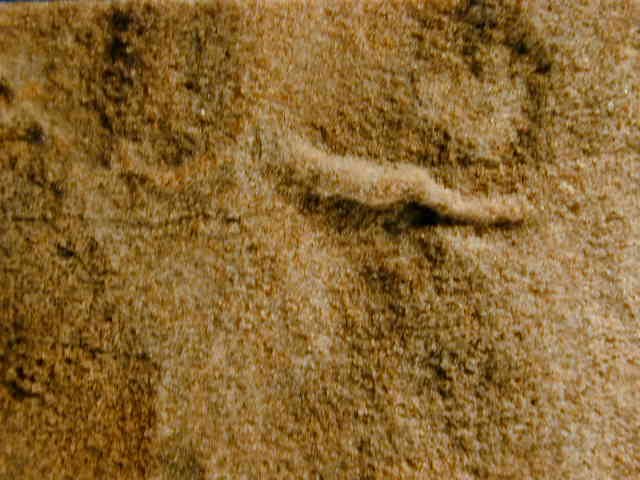
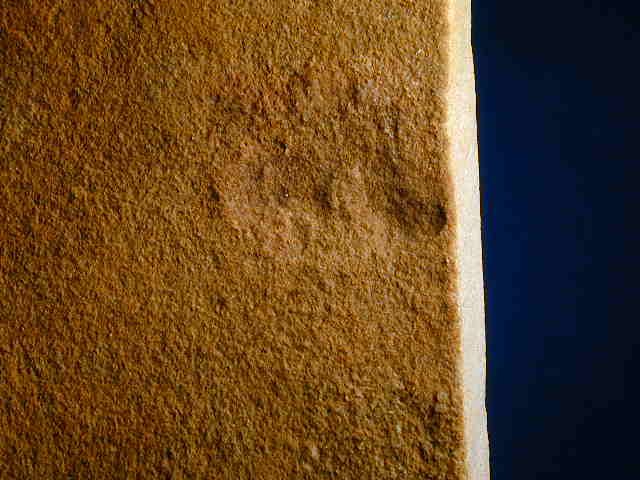
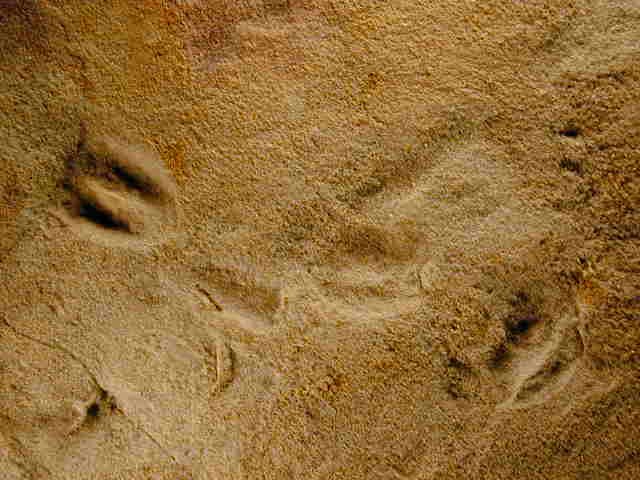
quarry is probably an older Cambrian Some dozen specimens have been removed with a large holotype specimen reserved for scientific study that has some 175, small euthycarcinoids measuring about one to two inches; a few of these exhibit fine leg and tail details. Eight specimens, including this one, contain about 8 to 12 small arthropods in an apparent death assemblage. Another three specimens are large, single animals that are about five inches in length. The smaller animals may be hatchlings, few of which survived to larger size. The larger animals may be yearlings or older, for example. Given that many tracks from the Krukowski quarry have a width of two or more inches, most trackway inchnofossils in the quarry may have been made by older, larger euthycarcinoids. Assuming no other arthropod-containing layer is discovered in the Krukowski quarry, this fossil may be one of the only few that will ever become commercially available. The Cambrian
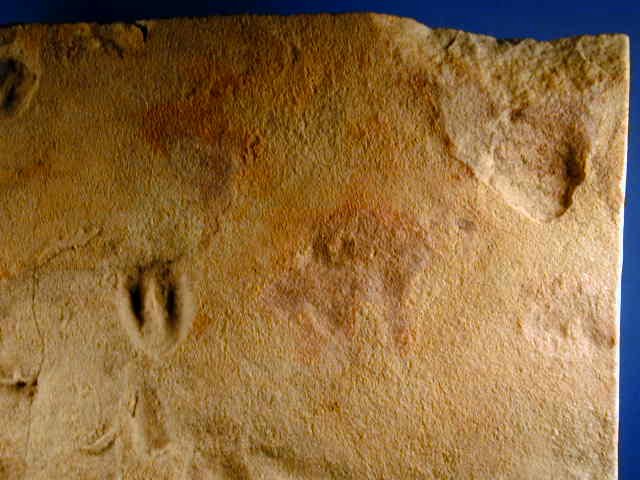
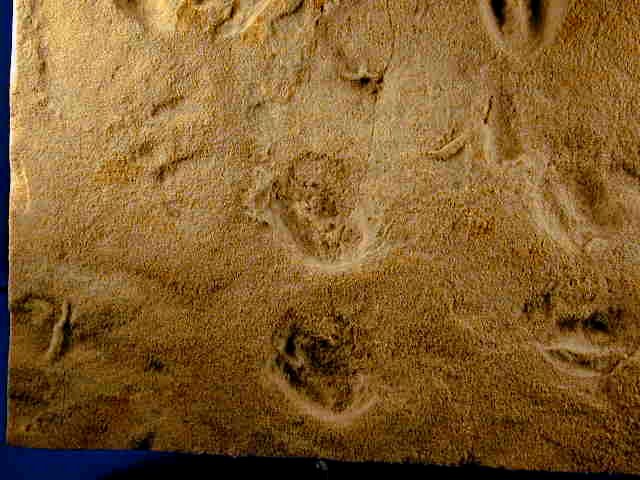
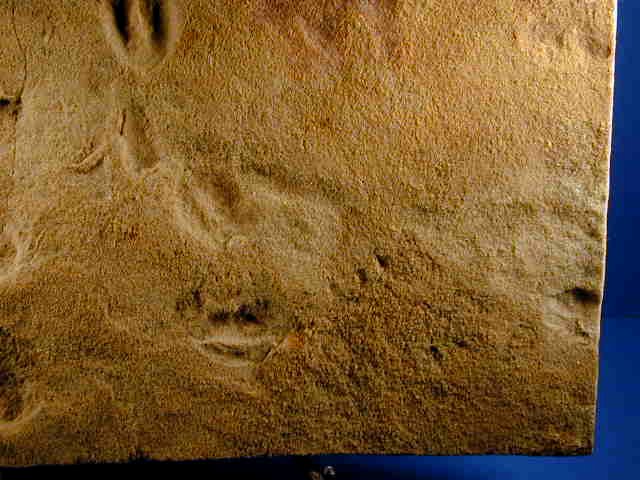
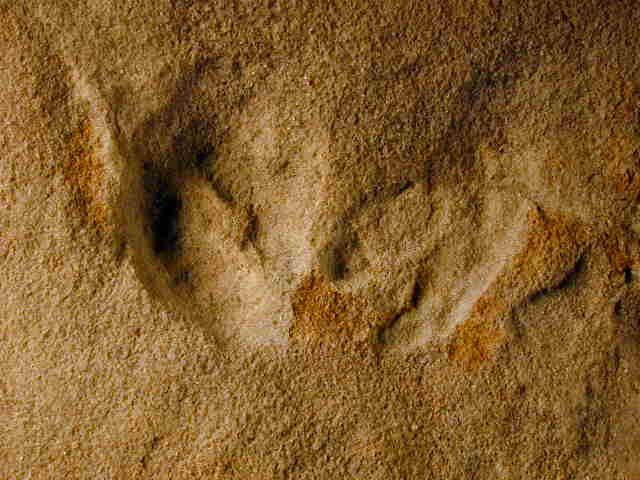
euthycarcinoid assemblage offered here is a section of the singular
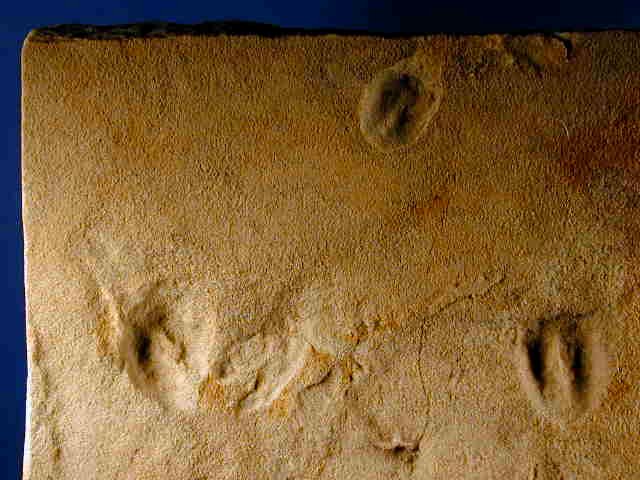
level where these fossils have been found, and contains the hypo-relief
(the underside of the bedding plane, with no counterpart) carapace
compression imprint of 13 animals. They present in deep relief with
little detail. Note that these fossils of a soft-bodied arthropod occur in course sandstone formed from a turbulent Cambrian shoreline. Such an environment yields body fossils as opposed, for example, to the soft-bodied preservation possible in Laggerstaten formations such as Chengjiang or the Burgess shale where animals were buried in fine marine sediment providing anoxious conditions low or depleted in oxygen. |