|
 Precambrian
stromatolite is the oldest of all fossils, and with much labor
(cutting and polishing), it is most beautiful. The banding that
commonly appears in stromatolite is a record of the growth patterns
of colonies of microorganisms, principally photosynthetic prokaryotes
(e.g, cyanobacteria). The colors that are often expressed are
the result of the interaction of biological and sedimentary processes,
together with subsequent chemistry and mineral exchange. Precambrian
stromatolite is the oldest of all fossils, and with much labor
(cutting and polishing), it is most beautiful. The banding that
commonly appears in stromatolite is a record of the growth patterns
of colonies of microorganisms, principally photosynthetic prokaryotes
(e.g, cyanobacteria). The colors that are often expressed are
the result of the interaction of biological and sedimentary processes,
together with subsequent chemistry and mineral exchange.
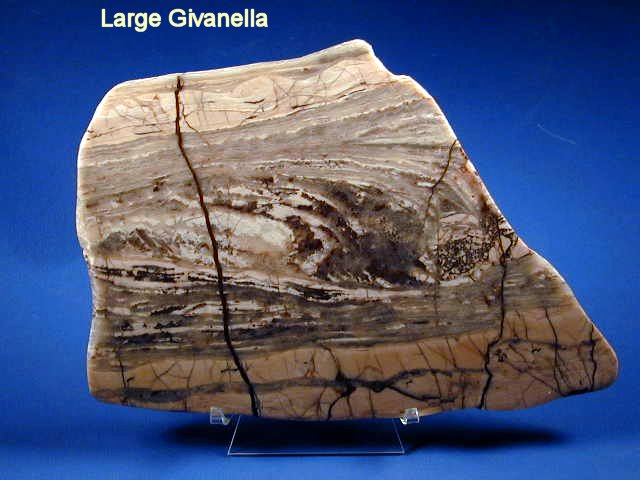
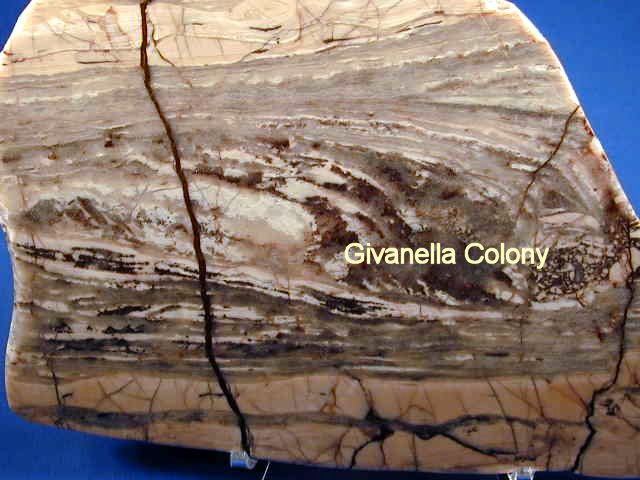
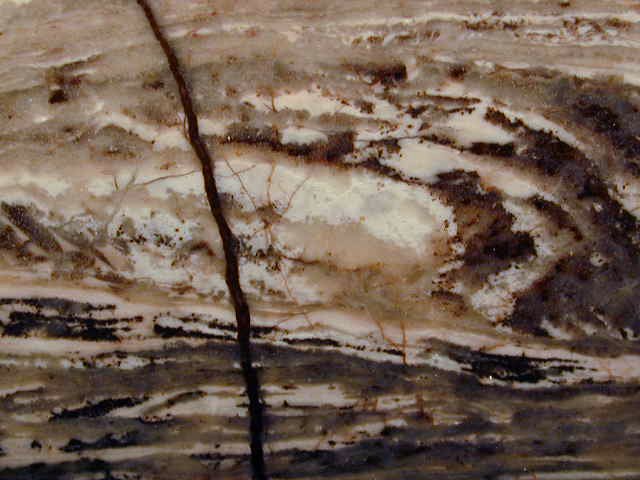
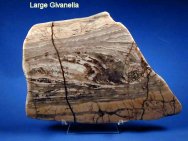
This
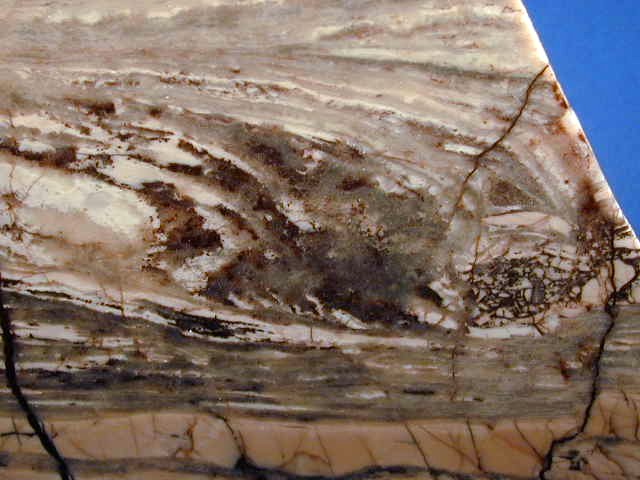
particular specimen exhibits a rare structure for stromatolite
in the formation, the so-called Girvanella-form comprising an
irregular, unsymmetrical spherical nodule. Note the cross section
of the nodule spanning the width of the specimen. Such forms are
more commonly found in Cambrian and younger stromatolite, when
bacterial colonies were subject to predation, such as from various
members of Domain Eucarya. In the case of this Lower Proterozoic
stromatolite, the Girvanella structure could be the result of
a new bacterial colony emerging subsequent to a violent disruption
of the reef system.
This
stromatolite is at once, ancient (Precambrian), beautiful, and
with spetacular colors. Coming from the Chocolay Group in an area
know as the Chocolay Hills located southeast of Ishpeming, Michigan,
it dates to the Lower Proterozoic, some 2.2 to 2.4 Billion years
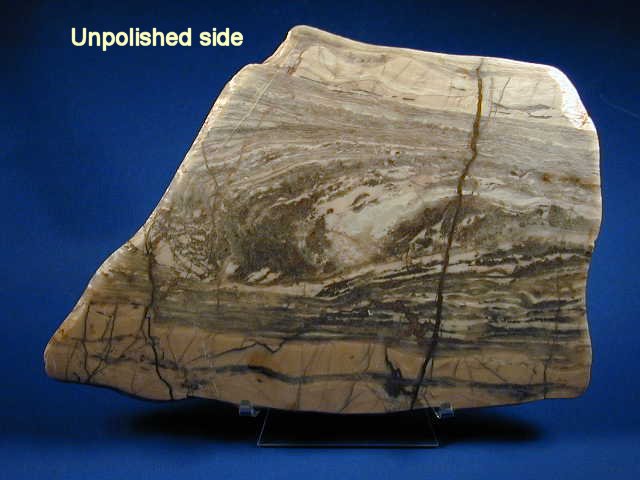
old. This stromatolitic carbonate has been hand-polished to a
mirror finish on one side exhibits intricate banding and a spectrum
of colors that are vivid and awesome. Such large pieces are particularly
difficult to prepare.
|