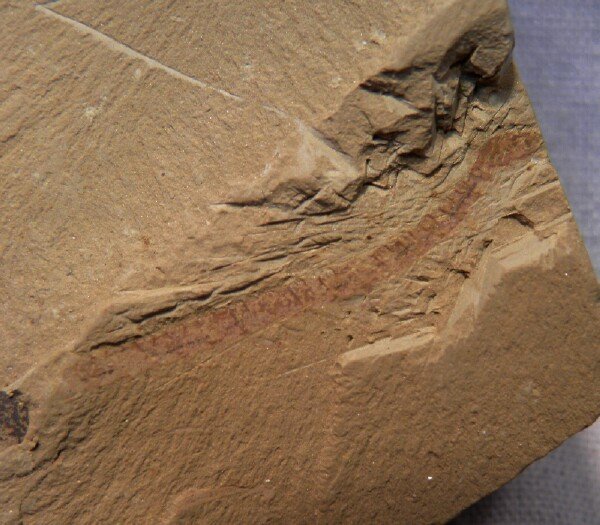
Lobopodian, Priapulid, and Worm Assemblage from Chengjiang Biota

Lobopodia, Cardiodictyon catenulum; Priapulida; Selkirkia sinica, Nematomorpha(?), Paleoscolex sinesis cylindrica

Geological Time: Early Cambrian (~525 million years ago)

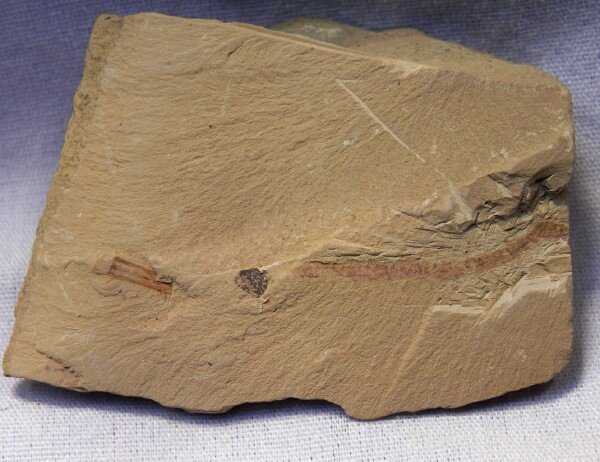
Size (25.4mm=1 inch): Cardiodictyon: 27 mm long Selkirkia: 9 - 10 mm long Paleoscolex: 11 mm long on a 65 mm by 52 mm matrix and 65 mm by 80 mm matrix pair

Fossil Site: Chengjiang Maotianshan Shales - Quiongzhusi Section, Yu’anshan Member, Heilinpu Formation, Haikou Village, Anning, Yunnan Province, China

Code: KHF05

Price: $695.00 - sold


Lobopodia CardiodictyonDescription: The discovery of the Chengjiang Biota by Hou Xian-guang in 1984 resulted in a clear window on what is known as the Cambrian Explosion. The diversity of soft-tissue fossils is astonishing: algae, medusiforms, sponges, priapulids, annelid-like worms, echinoderms, arthropods (including trilobites), hemichordates, chordates, and the first agnathan fish make up just a Priapulidsmall fraction of the total. Numerous problematic forms are known as well, some of which may have represented failed attempts at diversity that did not persist to the present day.

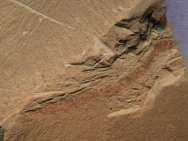
CardiodictyonThe Lobopodians are small marine and terrestrial animals termed colloquially “velvet worms” or “worms with legs”. While all Recent forms are terrestrial, most fossil Lobopodians are marine, and are known primarily from the Cambrian. Six named genera, each with a single species, are known from the Chengjiang Biota, making it the richest source of fossils of the type on Earth. This is one of the most striking, and quite rare; as of 2004, well less than 100 examples were known. A large specimen was thought to be 20 mm, so this one is abnormally large. A complete example possesses 23 – 25 angular sclerotized paired sclerites, each pair of which is associated with a pair of legs. Each leg bears curved claws which are thought to have served the creature as an adaptation to crawling on other organisms. It is most closely related to Aysheaia from the younger Burgess Shale, and is unknown outside of Yunnan Province.

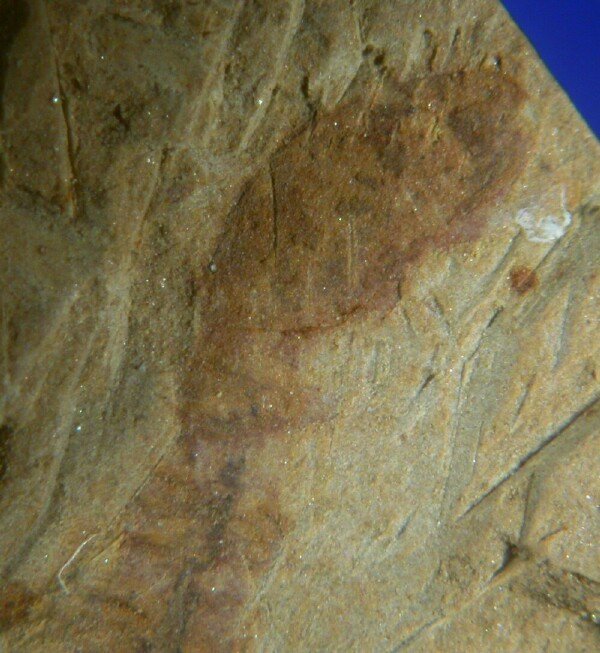
This fine example has incredible detail, with the “myriapod”- like legs in clear evidence.on the anterior portion which shows the head. Note too the examples of the priapulid Selkirkia, and a section of the putative nematomorph Paleoscolex. This is an exceptional death assemblage that would serve as the cornerstone of any public or private collection of fossils of the Cambrian Explosion.

Fossils Purchase Information

click fossil pictures to enlarge


Fossil Mall Navigation:

l Home l Fossils for Sale Map l Museum and Rare Fossils l How to Buy Fossils l

Navigate by Fossil Store:
l EDCOPE Enterprises l Western Fossils l Stonerelic l
l Pangaea Fossils l Primal Extincts l

Navigate by Fossil Category:
l Fossil Amber l Ammonites l Dinosaur and Reptile Fossils l
l Crinoids and Echinoderms l Fish Fossils l Insect Fossils l Invertebrate Fossils l
l Plant Fossils l Stromatolites l Trace & Ichnofossils l Trilobites l
l Russian Trilobites l Vertebrate Fossils l Fossil Kits l

Fossils & Science:
l Science Section l Paleobiology and Geological Timeline l The Fossil Dealers l