Lasanius
problematicus
Class Agnatha,
Order Anaspidiformes
Geological
Time: Upper Silurian (385 Million Years Old)
Size: Branchials:
20 mm; Dorsal elements: 20 mm and 25 mm
Fossil Site:
Seggholm, Muikirk, Ayrshire, Scotland
|  Description:
The Anaspids were simple dorso-laterally compressed fish that probably
led a bottom-dwelling existence. Their main common feature was a
jawless mouth. Indeed the name means without jaws. They were mostly
quite small fishes that flourished during the Silurian and Devonian
that then became extinct except for their modern-day relatives the
Lampreys and Description:
The Anaspids were simple dorso-laterally compressed fish that probably
led a bottom-dwelling existence. Their main common feature was a
jawless mouth. Indeed the name means without jaws. They were mostly
quite small fishes that flourished during the Silurian and Devonian
that then became extinct except for their modern-day relatives the
Lampreys and 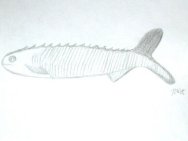 Hagfishes.
The gills opened as a row of holes along the side of the animal,
typically numbering from 6-15. One unusual example from Canada holds
the record for gills at 30 pairs! They probably behaved much like
the lampreys, and most lived in freshwater environments. This fine
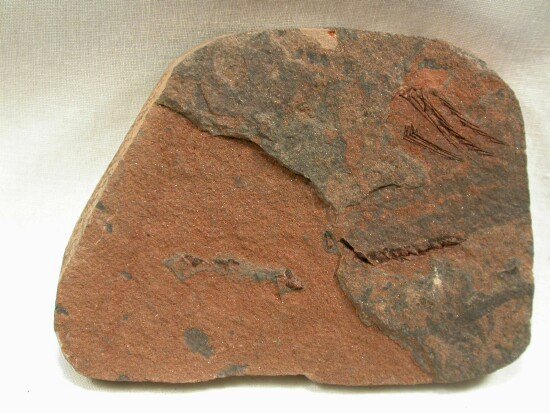
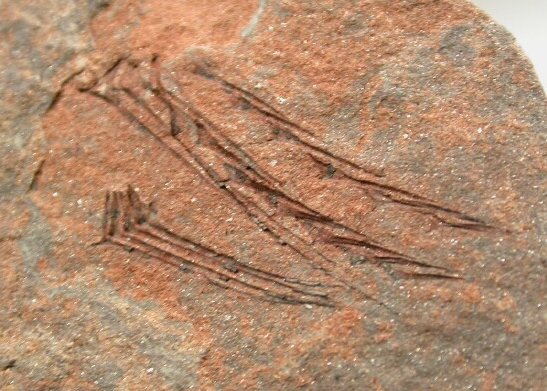
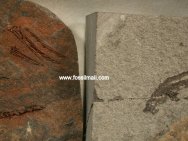
example is known as Lasanius. It had an elaborate array of dorsal
scales a number of which which are seen here. Complete examples
of the Anaspida are quite rare, with few ever available to the general
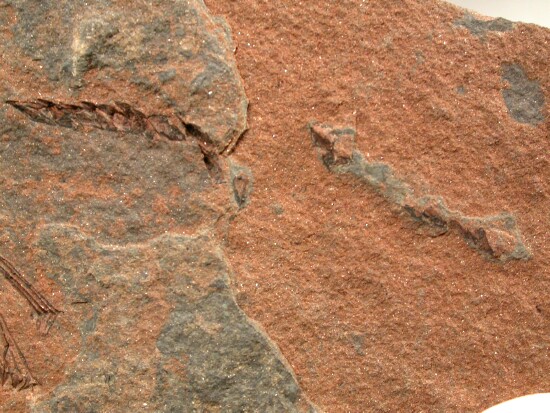
public. What is seen here is some of the dorsal spines and the branchial
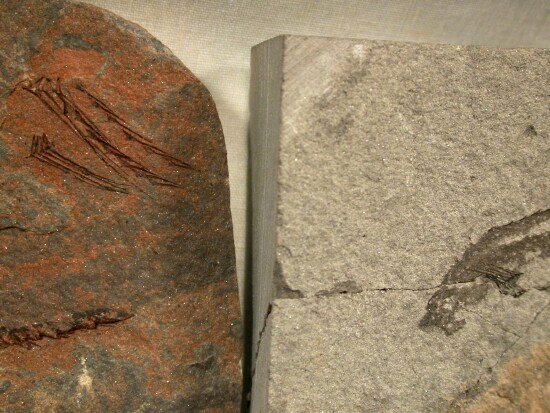
arches of what must have been a truly enormous example. I have included
a photograph of a near-complete Lasanius of normal proportions for
comparison. A Goliath among Davids, indeed! Hagfishes.
The gills opened as a row of holes along the side of the animal,
typically numbering from 6-15. One unusual example from Canada holds
the record for gills at 30 pairs! They probably behaved much like
the lampreys, and most lived in freshwater environments. This fine
example is known as Lasanius. It had an elaborate array of dorsal
scales a number of which which are seen here. Complete examples
of the Anaspida are quite rare, with few ever available to the general
public. What is seen here is some of the dorsal spines and the branchial
arches of what must have been a truly enormous example. I have included
a photograph of a near-complete Lasanius of normal proportions for
comparison. A Goliath among Davids, indeed!
Also
see: Paleozoic Fish
Fossils |
|