Agnatha,
Thelodontiformes
Geological
Time: Upper Silurian
Size: 70
mm
Fossil Site:
Seggholm, Muikirk, Ayrshire, Scotland
|  Description:
The Thelodontia are a group of fishes most commonly known from their
distinctive tooth-like scales. Indeed the term Thelodont , derived
from Greek, means Description:
The Thelodontia are a group of fishes most commonly known from their
distinctive tooth-like scales. Indeed the term Thelodont , derived
from Greek, means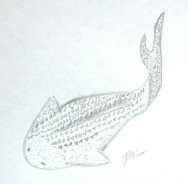 nipple
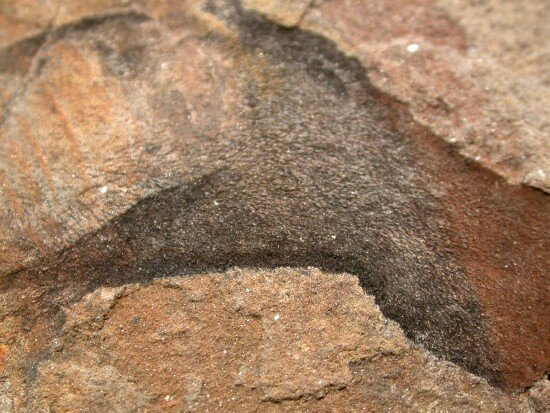
tooth. The teeth have a characteristic crown made
of dentine. The scales even on a single specimen are quite variable.
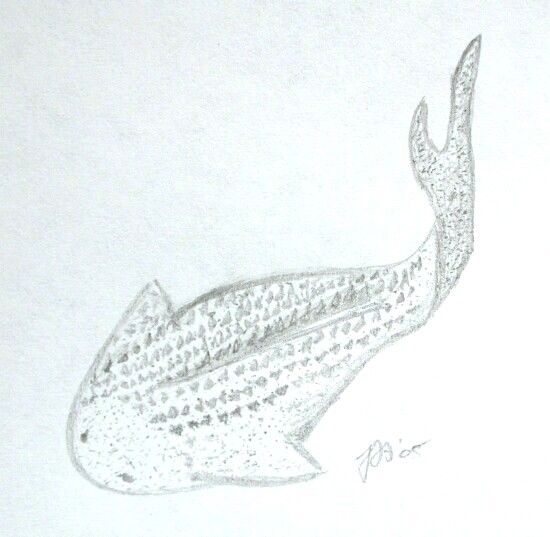
Thelodonts are rarely found as complete specimens; those that are
show them to be flattened
fish, many of which were bottom dwellers. Recent finds of intact
specimens from Canada show that they radiated into some deep-bodied
forms that swam freely in the water column. These deep-bodied forms
may have been more closely allied with jawed fishes than their other
relatives. All Thelodonts were extinct by the Upper Devonian. This
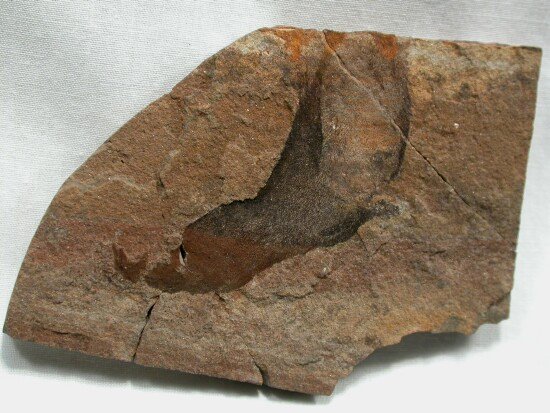
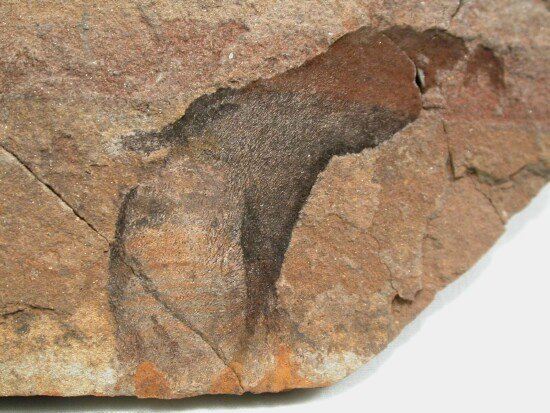
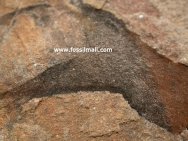
high-quality specimen that has recently been obtained from a 50
year old collection shows the distinctive scales. nipple
tooth. The teeth have a characteristic crown made
of dentine. The scales even on a single specimen are quite variable.
Thelodonts are rarely found as complete specimens; those that are
show them to be flattened
fish, many of which were bottom dwellers. Recent finds of intact
specimens from Canada show that they radiated into some deep-bodied
forms that swam freely in the water column. These deep-bodied forms
may have been more closely allied with jawed fishes than their other
relatives. All Thelodonts were extinct by the Upper Devonian. This
high-quality specimen that has recently been obtained from a 50
year old collection shows the distinctive scales.
Also
see: Paleozoic Fossil
Fish |
|